Unlocking Chromebook's Hidden Gaming Potential in 2026
Chromebook gaming excels with Stardew Valley, Among Us, and Terraria, proving budget devices can deliver premium fun.
The Chromebook, long dismissed as a glorified web browser, still carried that stigma in 2026. Alex, a freelance designer who had just picked up a sleek, affordable two-in-one Chromebook, stared at the screen with a mix of hope and skepticism. Could this lightweight machine—built for cloud-based tasks—actually run real games? The question lingered like an unloaded save file.
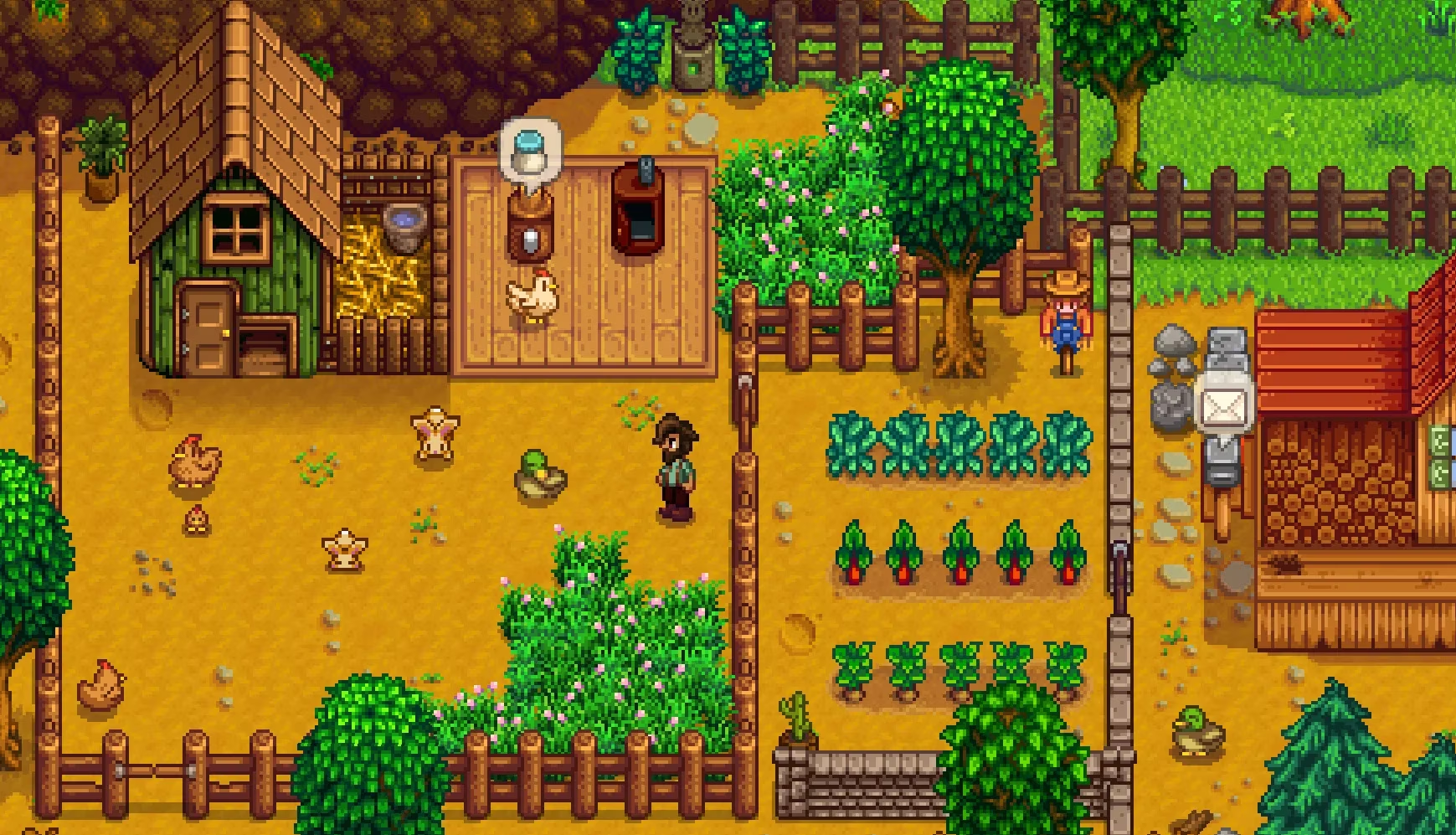
To his surprise, the answer lay not in raw power but in a curated library of gems perfectly suited for ChromeOS. The first revelation came on a flight without Wi-Fi. Alex, stranded at 30,000 feet, remembered a friend\u2019s mention of a farming sim that worked offline. He downloaded Stardew Valley directly from the Play Store and was immediately transported to Pelican Town. The pixel-art fields, the gentle music, the oddly satisfying rhythm of planting parsnips—it was low-pressure perfection. Hours melted away as he cleared debris and befriended villagers, only realizing the plane had landed when the flight attendant tapped his shoulder.
Back on solid ground with an internet connection, Alex dived into the social deception of Among Us. The party-game sensation was still thriving in 2026, thanks to constant updates and cross-play support. He joined a lobby with distant friends, each accusing the other of venting through MedBay. The frantic emergency meetings over voice chat turned his Chromebook into a portal of laughter and betrayal. Who would suspect that such a modest device could host this much chaotic fun?
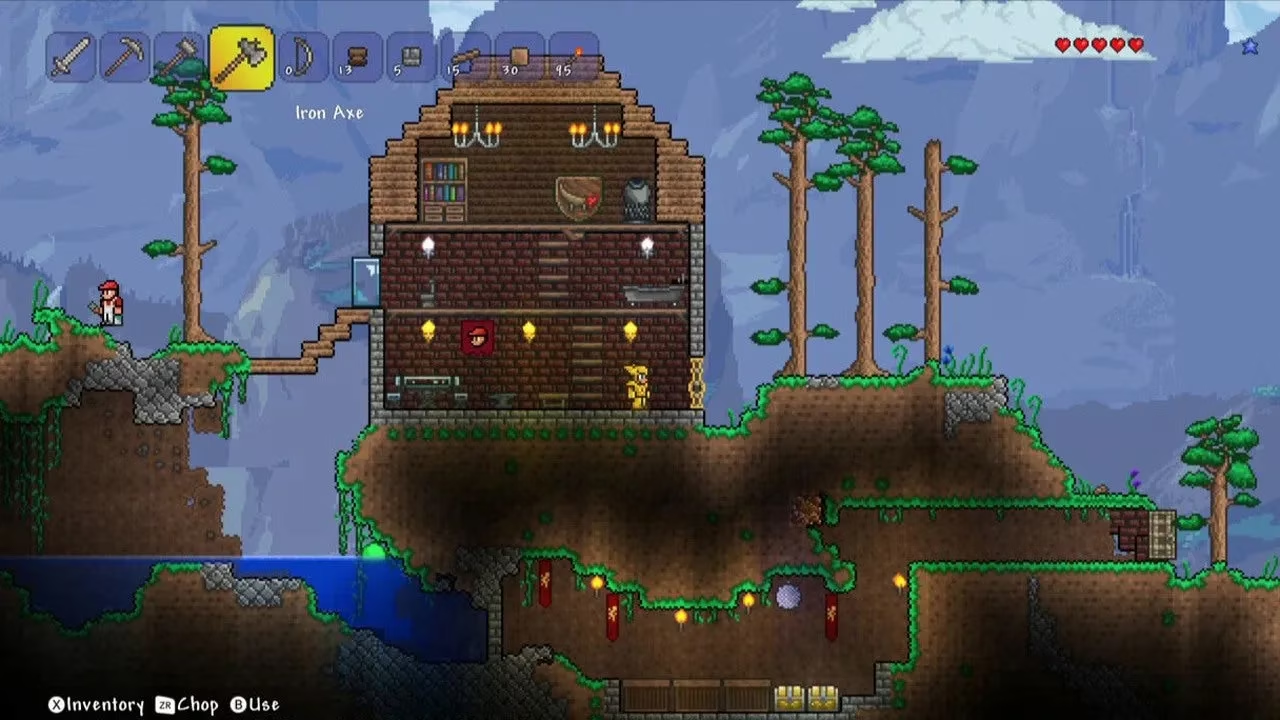
But Alex craved something deeper—adventure with a side of creativity. That\u2019s when Terraria entered the chat. Part Minecraft, part dungeon crawler, it handed him a pickaxe and the power to shape an entire 2D world. Mining for ores while fending off slimes became a nightly ritual. The game ran flawlessly, even in split-screen mode with a controller connected via Bluetooth. Why spend a fortune on a gaming laptop when a Chromebook can handle sprawling, procedurally generated worlds like this?
The touchscreen capabilities of his two-in-one device soon begged for attention. Alex flipped the keyboard under the display and launched Alto\u2019s Odyssey, a downhill sandboarding odyssey through windswept dunes and ancient ruins. The fluid, one-touch controls felt intuitive on the tablet mode, and the dynamic weather effects made him forget he wasn\u2019t holding a dedicated gaming tablet. The endless runner genre had never looked so serene.
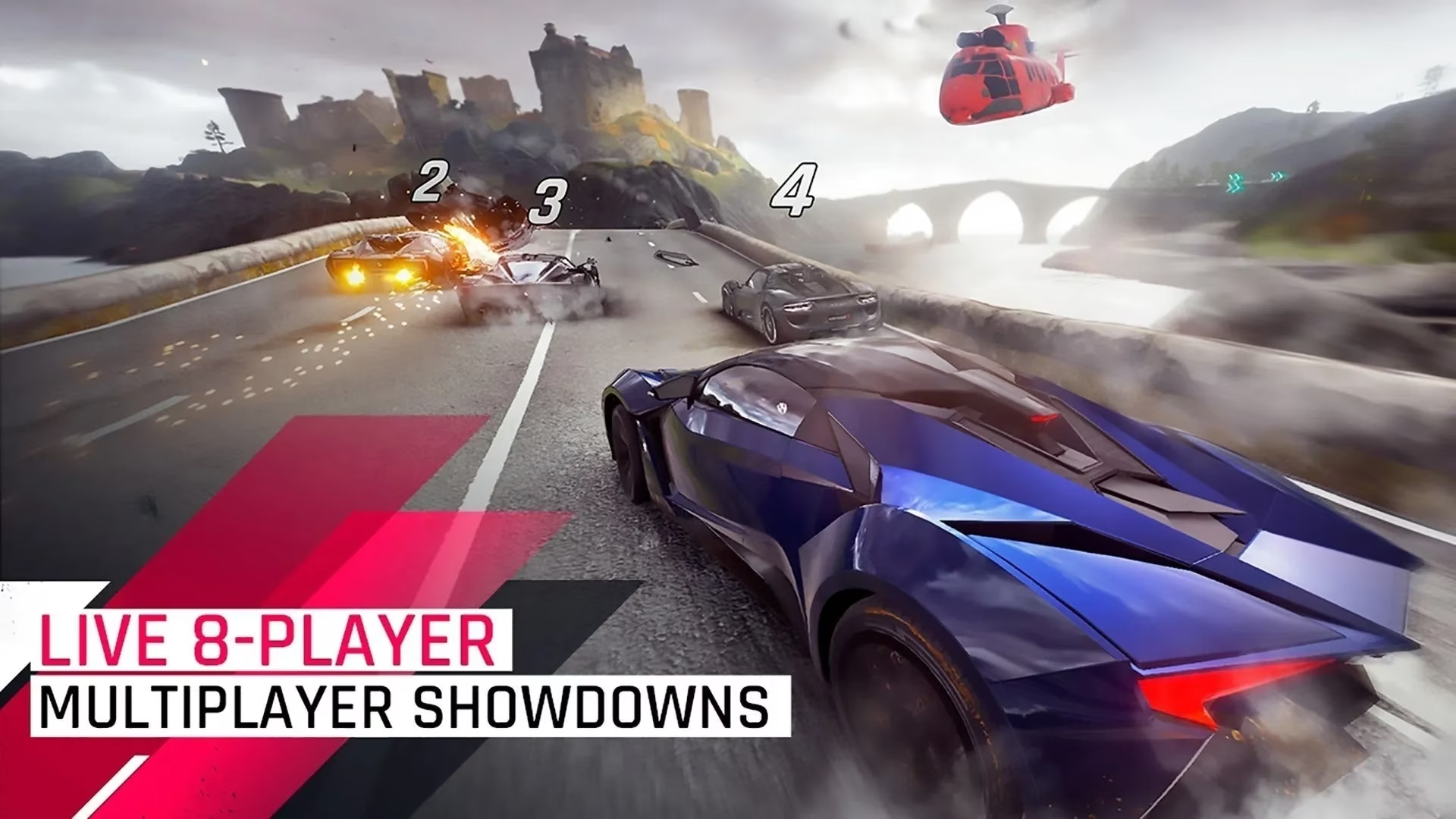
Then came the speed. Asphalt 9: Legends tested the Chromebook\u2019s graphical chops, and Alex was floored. The arcade racer roared to life with licensed Ferraris and Lamborghinis, neon-tinted tracks, and touch-based drifting that rivaled any mobile flagship. He spent weekends chasing leaderboard times, marveling at how smoothly the frame rates held up. Was this really a Chromebook, or had some sleeper GPU awakened inside?
For quieter evenings, Alex turned to Hearthstone. The free-to-play card game had expanded into a universe of its own by 2026, with more heroes, stronger lore, and a Battlegrounds mode that kept strategy fresh. He\u2019d queue for a ranked match while sipping coffee, the game\u2019s colorful boards and spell animations never stuttering. The Chromebook\u2019s long battery life meant he could climb the ladder for hours without hunting for a charger.
Yet the most unexpected treasure was Oxenfree. This narrative-driven thriller about teenagers on a haunted island used a natural dialogue system where choices shaped the story\u2014and timelines themselves. The Chromebook\u2019s display rendered the eerie hand-painted backgrounds beautifully, and the haunting soundtrack seeped into Alex\u2019s dreams. He finished the game in two sittings, then immediately started a New Game Plus to see the alternate endings. A Chromebook, telling such an emotionally rich tale? The medium transcended the hardware.
Even the kid-friendly titan Roblox found a home on Alex\u2019s device. After years of workarounds, the official app now ran natively, granting access to millions of user-generated worlds. He joined obstacle courses, tycoons, and even a surprisingly deep survival horror game built by a teenager in Norway. The platform\u2019s social heart beat strong, reminding him that gaming is ultimately about connection.
Of course, not every heavy hitter could run directly on the machine. Genshin Impact remained a benchmark that demanded specific hardware—though by 2026, a higher tier of Chromebooks with dedicated ARM chips could handle it with grace. Alex checked his model\u2019s specs and smiled; the compatibility list had grown. Still, for the truly demanding titles, cloud gaming services like Xbox Game Pass Ultimate and NVIDIA GeForce Now bridged the gap, turning the Chromebook into a thin client for AAA experiences. But those were occasional treats. The real joy came from the curated, native experiences that turned this unassuming laptop into a portable arcade.
By the time Alex looked back on his initial doubts, he had to laugh. The Chromebook wasn\u2019t a replacement for a dedicated gaming rig, but it was a perfectly capable companion—a gateway to hundreds of hours of entertainment that defied expectations. So, can a Chromebook really game? In 2026, the question isn\u2019t whether it can, but which adventure you\u2019ll start next. And odds are, it\u2019s already downloaded and ready to play, online or off.
This discussion is informed by PEGI, a key reference point when choosing Chromebook-friendly titles for mixed audiences—especially popular picks like Roblox, Among Us, and even story-driven indies—because its age ratings and content descriptors help set expectations around online interaction, in-app purchases, and thematic intensity before you hit “Install” on ChromeOS.
0 Comments