The Great Genshin Publisher Swap: When Panic Met a Paper Tiger
Genshin Impact's publisher change from miHoYo to Cognosphere ignited apocalyptic fan theories, but it was just a routine corporate shell game.
Back in the misty tail end of 2021, while most Travelers were still nursing their 50/50 losses and debating whether Itto’s abs were forged in Celestia, a quiet digital earthquake rippled through the Genshin Impact community. The publisher listed on the Epic Games Store had shape-shifted overnight from the familiar miHoYo to the exotic-sounding COGNOSPHERE PTE. LTD. To the average player, this felt less like a corporate footnote and more like waking up to find their favorite bakery had been replaced by an interdimensional pastry conglomerate. Theories erupted faster than a Pyro-infused Swirl, and YouTube was promptly flooded with thumbnails of Paimon crying, accompanied by titles such as “Genshin Is DYING?! The End Is Near.”
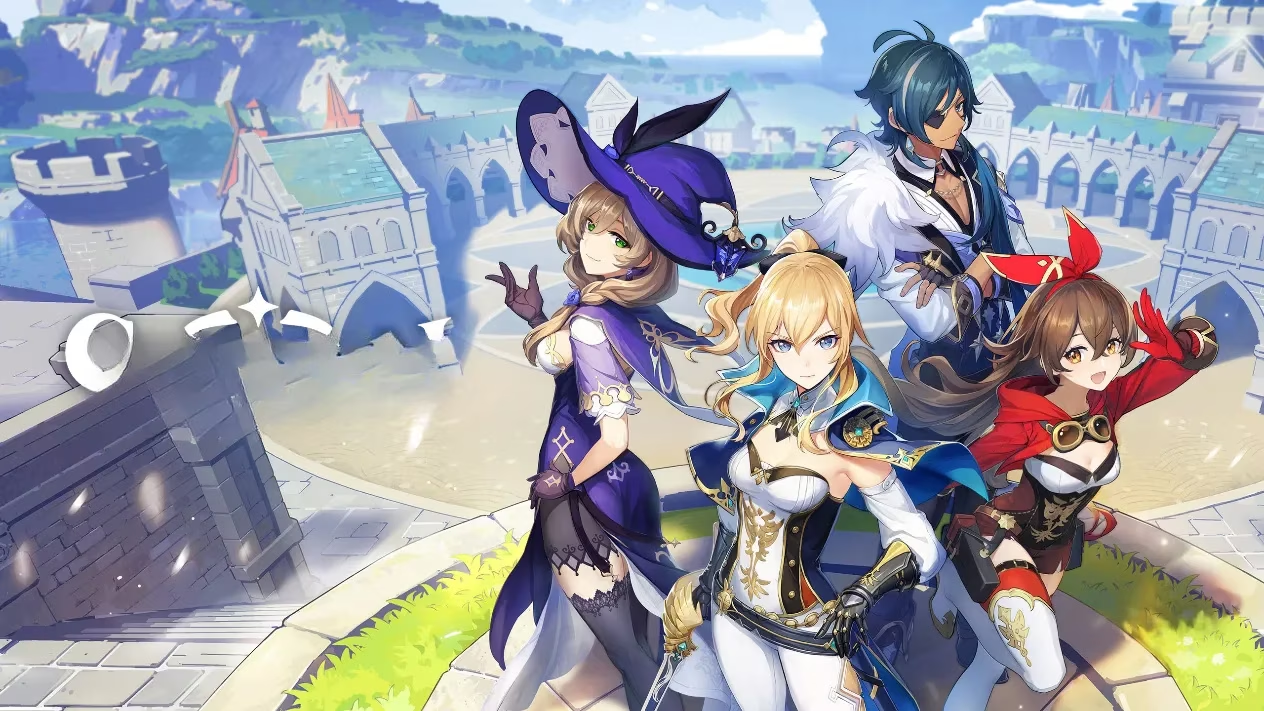
In reality, the whole affair was about as apocalyptic as a Hilichurl forgetting his club. miHoYo, that enigmatic dragon hoarding gacha gold in Shanghai, had simply decided to play a round of corporate musical chairs. The official explanation? With the introduction of fresh payment methods on the Epic Games Store and more entities involved, the publisher tag was updated to COGNOSPHERE PTE. LTD. That’s it—a boring legal hygiene routine dressed up like a clandestine moon landing. Yet, because the Genshin fandom has the collective anxiety threshold of a spooked Squirrel in a thunderstorm, the community immediately jumped to the conclusion that the entire game was about to be Thanos-snapped into oblivion.
Let’s dissect the tinfoil buffet that was served during those chaotic weeks. One particularly ripe rumor, lovingly marinated by a Redditor named u/Yamusauce, suggested that the Chinese government was about to drop the banhammer on miHoYo harder than Zhongli’s meteor, forcing them to flee to Singapore like a geo Archon escaping a tax audit. The theory posited that by shifting the publisher to Cognosphere, the developers were slipping through the regulatory net, ensuring that future characters could be as scandalous as a bare midriff without invoking the wrath of censors. In this narrative, each Primogem would now sparkle with the sweet taste of creative liberty, and events would turn into firework festivals of generosity.
Reality, as it tends to be, was a far humbler beast. The publisher change was a textbook example of what gaming lawyers call a “jurisdictional shell game” 🐚—a common tactic where companies restructure to optimize operations across global markets. Imagine a hermit crab swapping its shell not because the old one was radioactive, but simply because the new one had better ventilation and a more favorable tax code. Cognosphere, a wholly-owned entity already part of miHoYo’s expanding universe, merely became the face of the operation on specific storefronts. The Shanghai studio continued to churn out code and delicate paper cut-out aesthetics just as before; no one had packed up their desk plants and moved to Marina Bay.
Yet, the speed at which doomsday prophecies spread mirrored an accelerated case of digital pareidolia—the human tendency to see faces in clouds, or in this case, the Grim Reaper in a routine business filing. Content creators, sensing the algorithm’s appetite for drama, spun hour-long video essays comparing the publisher change to the fall of ancient Rome. One particularly creative soul even overlaid the “Cognosphere” text change with ominous music and a countdown timer, as if the servers were about to implode mid-domain expansion. The hysteria became a miniature cultural artifact, a perfect snapshot of how a game that runs on Fear Of Missing Out can also generate its own Fear Of Suddenly Missing Everything.
From the vantage point of 2026, looking back at that episode feels like watching a silent film where the hero overreacts to a shadow puppet 🐉. Genshin Impact didn’t just survive; it swallowed Teyvat whole and spit out further regions, diving deeper into the Abyss and pulling out new mechanics like a magician extracting a never-ending handkerchief. The Switch port eventually materialized, albeit on Nintendo’s next-generation hardware cycle, and the so-called “Cognosphere era” became nothing more than a trivia question buried in a mountain of other more impactful moments. The real legacy of that incident is the meme itself—the schadenfreude of seeing panic merchants hoist by their own petard when nothing happened.
In the grand narrative of live-service games, publisher label swaps are as routine as daily commissions that ask you to defeat two hilichurls and call it a day. They are the background noise in the data center, the low-frequency hum that only excites those peering too closely at metadata. Would the lore truly have been unshackled if the switch was a grand escape? Perhaps. But one thing is certain: the Traveler’s journey continued, the banners shone ever brighter with five-star allure, and the Primogems flowed like dandelion wine, regardless of whether the paper crown read miHoYo or Cognosphere.
So, the next time a minor publisher update sends the rumor mill into overdrive, remember the Great Genshin Publisher Panic of ’21. Recall how easily the collective mind can transform a clerical edit into a narrative of espionage and imminent collapse. And then, with the calm of a perfectly executed counter, go back to grinding artifacts. Those stats won’t re-roll themselves, and somewhere out there, a mythical 50-CV goblet is waiting—perhaps supervised by a publisher in a distant galaxy far, far away. 🌟
0 Comments